
Skip to content

Understand your treatment options

Types of IVF.
A plan built around you.

IVF is not one single protocol. Understand the different approaches, how they fit together, and the questions to ask as you build your treatment plan with Morgan Fertility.

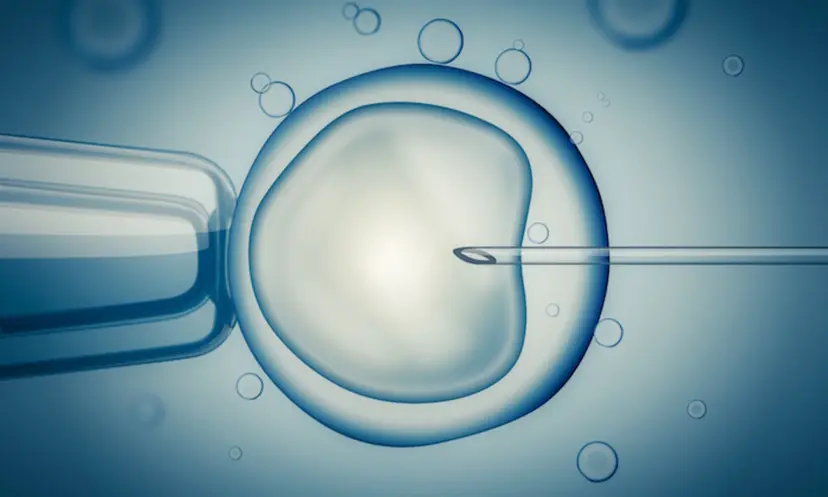
Microscopic view of an egg during an IVF laboratory procedure

Different approaches, individual decisions

Your IVF pathway starts with your story

All IVF involves fertilization outside the body. What changes is how eggs are obtained, whose eggs and sperm are used, and when an embryo is transferred. These choices can be combined in one treatment plan.

Conventional IVF

A personalized ovarian stimulation cycle

Fertility medications encourage several eggs to mature. Eggs are retrieved and fertilized in the laboratory, and an embryo may be transferred in the same cycle or frozen for a later transfer.

  • Medication doses tailored to your ovarian reserve and response
  • May be considered for tubal, sperm-related, or other fertility factors
  • Fresh or frozen transfer depending on your clinical plan

Mini-IVF

A lower-stimulation approach

Mini-IVF uses a lower-dose stimulation protocol, sometimes combining oral and injectable medications. It generally aims to retrieve fewer eggs than a conventional stimulation cycle.

  • May reduce medication use and medication costs
  • Fewer eggs may mean fewer embryos available
  • Not automatically the best option for every patient

IVF with donor eggs or sperm

More ways to build your family

Donor eggs, donor sperm, or donated embryos can be part of a family-building plan. The appropriate pathway depends on your medical history, available reproductive cells, and personal goals.

  • Screening and counseling are part of planning
  • Donor selection and availability affect the timeline
  • Legal guidance may be needed for your arrangement

Reciprocal IVF

One partner provides eggs; the other carries

In reciprocal IVF, eggs from one partner are fertilized with donor sperm. An embryo is then transferred to the other partner, allowing both partners to take part in the pregnancy journey.

  • Both partners receive an individualized evaluation
  • Requires donor sperm and coordination of treatment
  • Counseling and legal planning support informed decisions

The details of your plan

Three more decisions to understand

Conventional fertilization or ICSI?

With conventional fertilization, eggs and sperm are placed together. With ICSI, an embryologist injects a single sperm into an egg. ICSI is a fertilization method within IVF, not a separate stimulation protocol, and is not needed in every case.

Understand the IVF process

Fresh or frozen embryo transfer?

A fresh transfer takes place in the retrieval cycle. A frozen embryo transfer (FET) uses an embryo preserved for a later cycle. Your hormone levels, uterine lining, testing plans, and other health considerations help guide the timing.

Learn about embryo freezing

Should embryos be genetically tested?

Preimplantation genetic testing (PGT) can provide information about certain chromosome or inherited genetic conditions before transfer. Testing is optional, has limitations, and is not appropriate or beneficial for every patient.

Understand PGD, PGS & PGT

Make an informed decision

Know what your IVF quote covers

Compare the scope of a package, not just the number. Our published pricing is a starting point for a personalized discussion.

Published IVF package prices and treatment scope
TreatmentPublished priceScope
Fresh IVF Cycle$11,300Cycle only + monitoring + fresh embryo transfer
Mini-IVF$12,300Low-dose hormone stimulation, gentler protocol
Complete IVF Package$18,300IVF + frozen embryo transfer (FET) + PGT genetic testing

Inclusions vary by package. Ask for an itemized estimate covering medications, monitoring, pre-treatment testing, laboratory services, embryo transfer, and storage. Treatment suitability and outcomes vary by patient.

View pricing & financial options

A little more clarity

Your questions, answered

How do I know which type of IVF is right for me?

Your doctor considers your age, ovarian reserve, medical and pregnancy history, sperm testing, previous treatment response, and family-building goals. A consultation is an opportunity to compare the potential benefits, risks, costs, and alternatives before choosing a plan.

Is Mini-IVF the same as natural-cycle IVF?

No. Mini-IVF uses a lower-stimulation medication protocol. Natural-cycle IVF generally aims to retrieve the egg that develops in a natural menstrual cycle, with little or no ovarian stimulation. Ask your doctor whether either approach is clinically suitable and available for your situation.

Does ICSI guarantee fertilization or pregnancy?

No. ICSI can help address certain fertilization problems, including some forms of male-factor infertility, but it does not guarantee fertilization, embryo development, implantation, or a live birth. Your care team can explain why it may or may not be recommended.

Do I need IVF, or could IUI be an option?

Not everyone needs IVF. Depending on your diagnosis, ovulation induction or intrauterine insemination (IUI) may be reasonable alternatives. Other situations, such as some tubal conditions or significant sperm factors, may make IVF more appropriate. Your evaluation helps clarify these options.

Here when you are ready

Let’s find the right approach for you.

Bring your questions, test results, or previous treatment records. We will help you understand your options without assuming that every patient needs the same treatment.